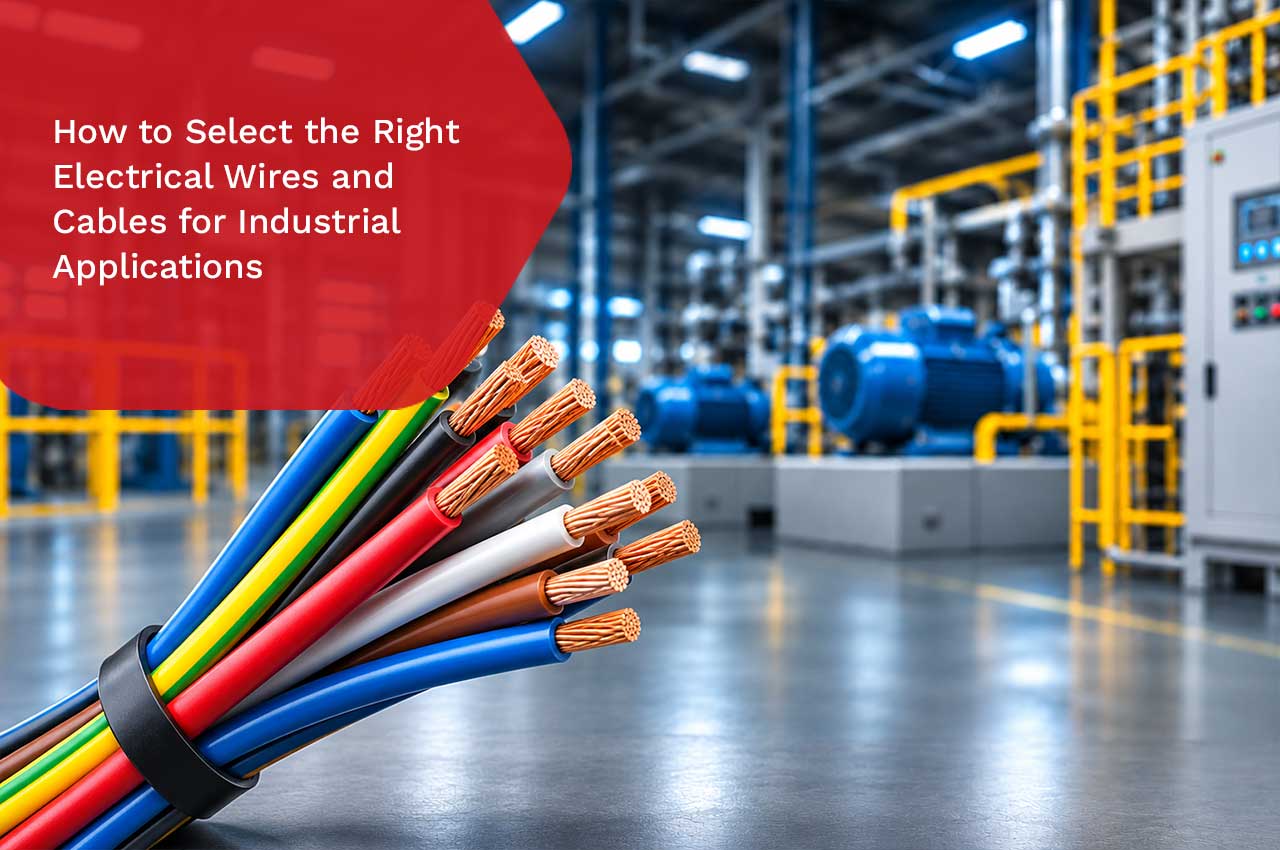
How to Select the Right Electrical Wires and Cables for Industrial Applications
Selecting the right wires and cables is extremely important in today’s industrial environment to ensure smooth, safe, and efficient operations. The performance of electrical systems, whether in manufacturing plants or infrastructure projects, depends heavily on the quality and suitability of the cables being used.
The right wires and cables for industrial applications improve energy efficiency, reduce maintenance costs, and enhance workplace safety. Conversely, unsuitable cables can cause voltage drops, overheating, unexpected downtime, and costly repairs.
In India, industrial cables should also comply with Indian Standards (IS) and IEC standards, such as IS 1554 for PVC-insulated cables up to 1.1 kV, IS 7098 for XLPE-insulated cables, and IEC 60502 for power cables. Buying cables with these marks means you get tested quality and safer operation.
What factors affect cable performance in industrial applications?
Several important factors influence the performance and lifespan of wires and cables in industrial applications. Considering these aspects during product selection helps ensure reliable operation and long-term performance.
Electrical load rating
Current-carrying capacity is one of the most critical considerations when selecting wires and cables. Industrial equipment often operates under heavy electrical loads. A cable with insufficient capacity can generate excessive heat and damage the insulation, reducing overall efficiency. Properly sized cables ensure safe power transmission and optimal performance in demanding industrial environments.
Derating: The current rating in the catalogue is given for standard conditions. In real plants, high ambient temperature, cables laid close together in groups, and cables buried deep or in ducts all reduce the current a cable can safely carry. Apply the correct rating factors (see IS 3961 and the manufacturer’s data) before you finalize the cable size.
Voltage drop and short-circuit rating
A thermally safe cable can still be the wrong size. On long runs, voltage drop can cause motors to run hot and equipment to underperform. Many designers keep voltage drop within about 3% to 5%, depending on the installation standard. The cable must also withstand the fault current until the protection device (breaker or relay) clears the fault.
Voltage ratings
A cable’s voltage rating is the maximum voltage it can safely withstand. Choosing wires and cables with the appropriate voltage rating helps prevent insulation breakdown and reduces the risk of electrical faults.
Operating temperature
Temperature significantly affects cable performance. High temperatures can reduce cables’ current-carrying capacity and accelerate insulation ageing. Selecting wires and cables designed to operate within the expected temperature range helps ensure reliable performance across diverse industrial applications.
Environmental conditions
Industrial environments often expose cables to harsh operating conditions. Moisture, chemicals, oils, dust, UV radiation, and corrosive substances can gradually damage cable insulation and outer sheathing. In demanding industrial applications, selecting durable wires and cables with appropriate protective materials is essential for long-term reliability.
Insulation material
Insulation material directly affects the durability and efficiency of wires and cables. PVC-insulated cables are widely used in general applications because they are versatile and cost-effective. However, XLPE-insulated wires and cables are often preferred for demanding industrial applications because they have higher thermal resistance and superior mechanical strength.
For comparison, PVC cables are rated for about 70°C continuous conductor temperature, while XLPE cables are rated for about 90°C. This higher limit allows an XLPE cable of the same size to carry more current.
Fire-safe cables (FRLS and LSZH)
In pharma plants, hospitals, cement plants, and other crowded or critical facilities, a cable’s fire behaviour matters as much as its daily performance. FRLS (flame retardant low smoke) cables Slow fire spread along the cable route. LSZH (low smoke zero halogen) cables produce little smoke and no toxic halogen gases, helping people escape safely and protecting sensitive equipment.
Conductor and cable construction
Choose copper or aluminium conductors based on load, space, termination method, and budget. Use armoured cables where mechanical damage is possible or for direct burial, and flexible cables where the cable must move.
Mechanical stress and vibration
Many industrial applications involve heavy machinery, moving equipment, and continuous vibrations. These conditions can subject cables to bending, pulling, and mechanical stress. Using robust wires and cables designed for industrial environments helps reduce maintenance issues and keep operations running without interruption.
How often should industrial electrical cables be inspected?
Regular inspections are essential to maintain the reliability and safety of industrial wires and cables. Even high-quality cables can wear out or sustain damage from environmental exposure, operational stress, and heavy loads. Routine inspections help identify issues early, before they become major failures or operational disruptions.
As good practice, visual inspections are generally recommended every six months to check for the following signs:
- Damaged insulation
- Physical wear and tear
- Corrosion
- Moisture ingress
- Loose connections
- Overheating
- Abrasion or impact damage
Conduct a comprehensive electrical inspection annually. This may include insulation resistance testing, thermal imaging, continuity testing, and load analysis.
More frequent inspections may be necessary for facilities operating under severe conditions. Manufacturing plants, chemical processing units, and power generation facilities often follow stricter inspection schedules to maintain wiring reliability and operational safety. The right frequency depends on the risk level and site conditions. Implementing a proactive cable maintenance program helps ensure reliable performance in demanding industrial environments.
How LS Electricals can help:
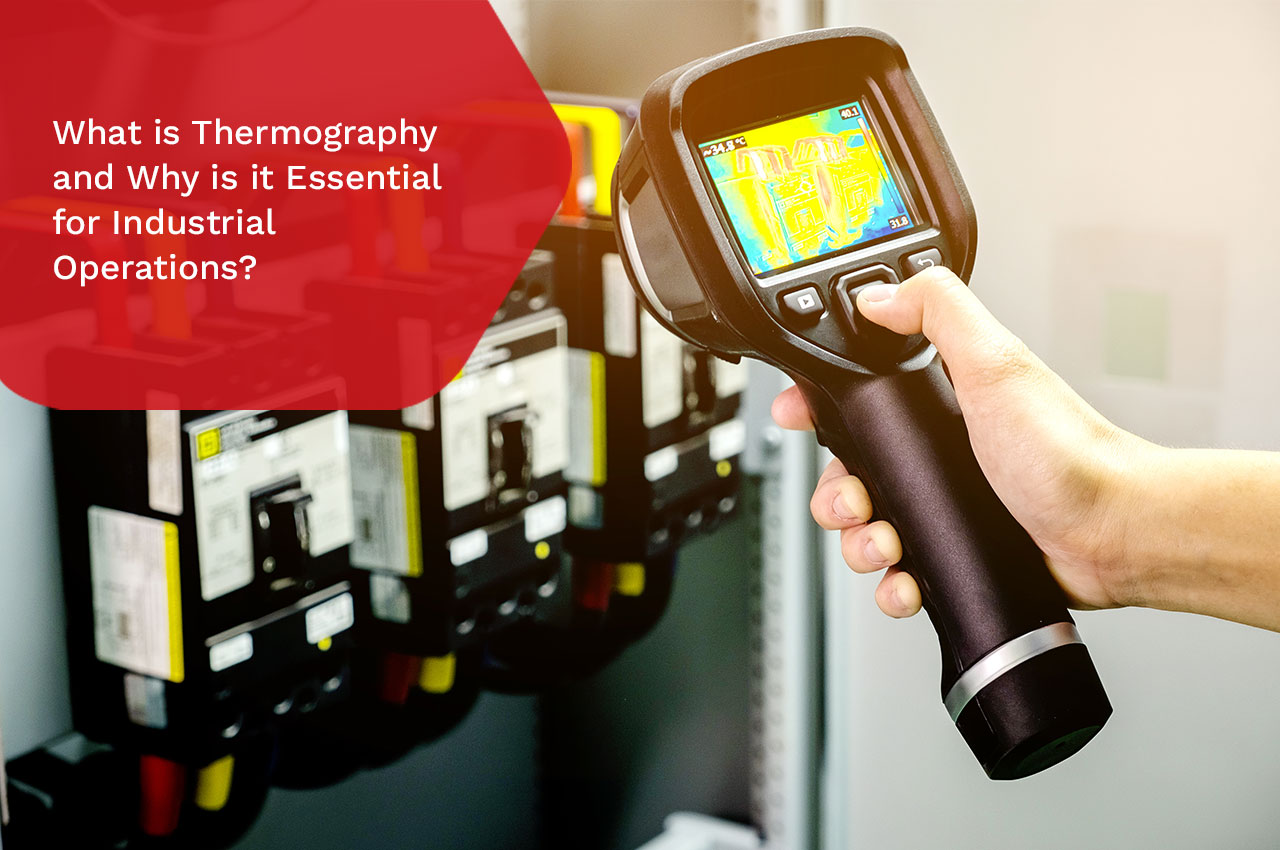
- Thermography finds hot spots in cables, joints, and terminations before they fail.
- Electrical Safety Audit (ESA) checks the condition and safety of your complete electrical installation.
- Earth Pit Testing confirms that your earthing system will protect people and equipment during a fault.
- Energy Audit identifies energy losses, including losses caused by undersized or overloaded cables.
Final thoughts
Selecting the appropriate wires and cables for industrial applications is a critical investment that directly impacts safety, productivity, and long-term operational reliability. Multiple factors influence cable performance, including load capacity, derating, voltage drop, temperature, insulation, fire safety, environmental conditions, and mechanical stress.
Choosing high-quality wires and cables from trusted brands such as Havells and Anchor by Panasonic, supplied and supported by LS Electricals, helps businesses build reliable electrical systems that deliver strong performance, improved efficiency, and long-term durability across a wide range of industrial applications. Regular inspection and maintenance also help identify and resolve issues before they become serious operational concerns.
Need help selecting or testing industrial cables? LS Electricals has over 25 years of experience serving the pharma, cement, infrastructure, government, and hospital sectors across Telangana and Andhra Pradesh. Our team can help you with cable selection, supply, and condition assessment.
FAQs
1. What makes industrial wires and cables different from regular cables?
Industrial cables are designed for higher loads, harsh environments, and continuous operation. They offer thicker insulation, armouring options, fire-safe versions (FRLS and LSZH), and ratings tested to IS and IEC standards. This gives better durability and safety than standard cables.
2. How do I know which cable size is right for my industrial application?
Cable size depends on load current, voltage level, cable length, installation conditions, and fault level. Calculate the current rating after derating for temperature and grouping. Then check voltage drop and short-circuit withstand. For critical loads, ask an electrical engineer to confirm the size.
3. Can the same wires and cables be used indoors and outdoors?
Outdoor use requires UV-resistant, moisture-proof, or armoured cables, while indoor cables focus more on flexibility and space constraints. Always check the cable’s sheath material and rating for the installation location.
4. Why is cable insulation so important in industrial applications?
Insulation prevents electrical leakage, protects against short circuits, and ensures safe energy flow even under heavy industrial conditions. XLPE insulation handles about 90°C continuous operation, compared with about 70°C for PVC.
5. What role does temperature play in cable performance?
High temperatures reduce cable efficiency and lifespan, while extreme cold can reduce flexibility. A hot plant room or a crowded cable tray lowers the safe current of a cable. Using correctly rated cables and applying derating ensures stable performance.
6. How does overloading affect industrial cables?
Overloading causes overheating, insulation damage, and potential fire risks. It also reduces the overall lifespan of wires and cables. Regular thermography can detect overheating cables and joints before a failure occurs.
For more information, email us at info@lselectricals.com
Visit us: www.lselectricals.com.


 Brands


 Applications




 Recent Posts