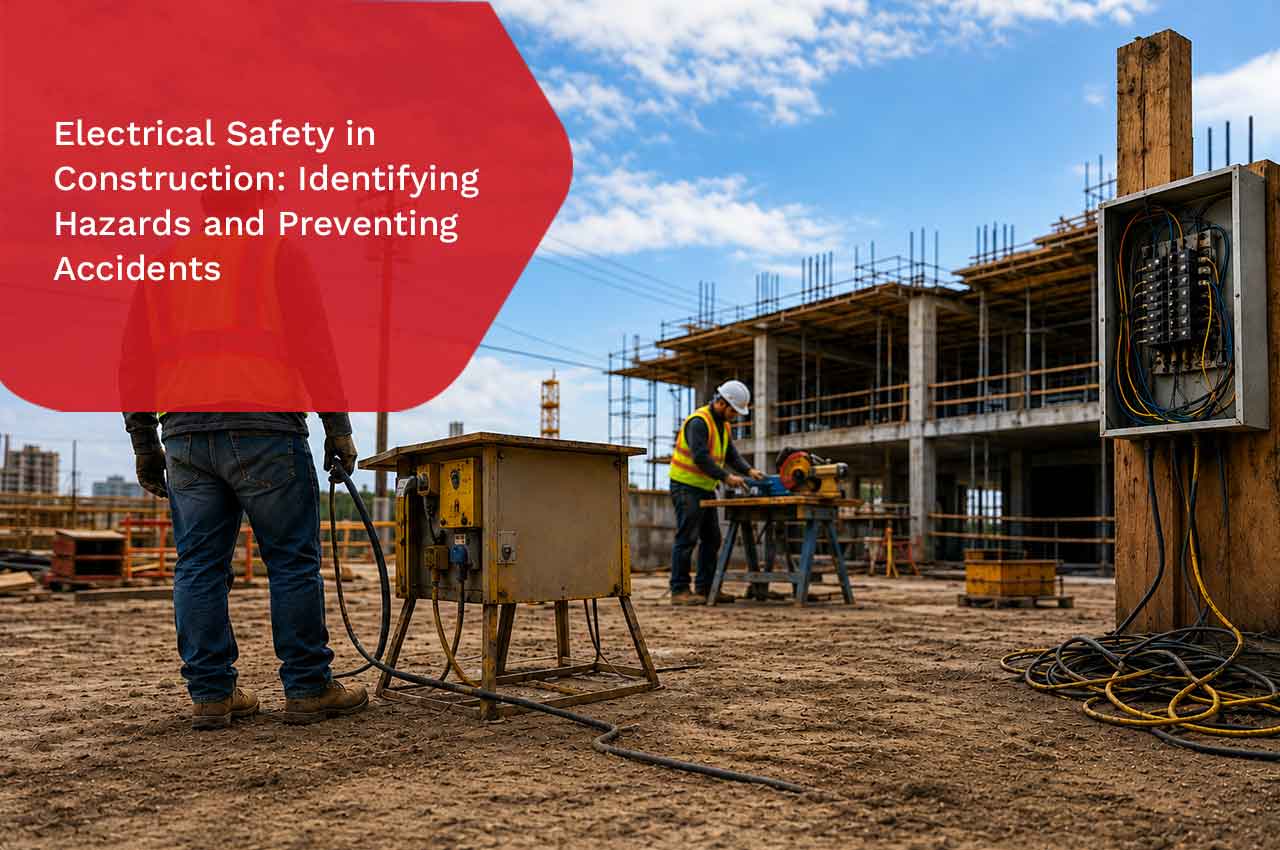
Electrical Safety in Construction: Identifying Hazards and Preventing Accidents
Construction is one of the most dangerous industries when it comes to electrical risks. Construction sites face constant electrical exposure, making electrical safety in construction critical for preventing serious injuries and fatalities. Therefore, electrical safety on construction sites is a top priority that goes beyond mere compliance.
According to construction industry statistics, electrocution is one of the “Fatal Four” hazards responsible for the majority of fatalities among construction workers. Nearly 50% of all electrocutions occur in the construction industry.
With such risks involved, identifying electrical hazards early and implementing effective electrical safety tips are essential to preventing accidents and ensuring a safe working environment.
Understanding Electrical Hazards in Construction
Electrical hazards on construction sites arise due to dynamic environments, temporary installations, and the constant movement of workers and equipment. As a result, these hazards can lead to:
- Electric shocks
- Severe burns
- Arc flashes
- Fires and explosions
- Fatal electrocutions
Many incidents occur due to a lack of awareness, workers being unfamiliar with hazards, and safety precautions not being followed consistently.
The most effective way to prevent these occurrences is through awareness, training, and proper management of electrical systems.
What are the most common electrical hazards on construction sites?
Understanding the most common hazards is the first step toward prevention.
- Contact with Overhead Electrical Lines
Accidental contact with overhead electrical lines is one of the leading causes of electrical fatalities. High-voltage overhead lines can cause severe electrocution and serious injuries upon contact.
- Damaged Extension or Electrical Cables
Temporary power cables and extension cords on construction sites are often exposed to wear and deterioration. When electrical insulation is damaged or wires become exposed, they create a significant risk of electrical shock or fire.
- Improper Use of Electrical Tools
Using damaged electrical tools can greatly increase the risk of electrical accidents, especially when the tools are used in wet environments.
- Working on Live Electrical Circuits
When workers operate on live electrical systems without first isolating the circuit, the chances of electrical shock or arc flash incidents increase significantly.
- No Ground Fault Protection
Without ground fault protection devices, electrical faults can travel through the human body and cause severe injury or death.
- Improperly Installed Electrical Systems
Faulty electrical installations, overloaded circuits and temporary electrical setups increase the likelihood of electrical accidents.
- Wet or Harsh Working Conditions
Water is a conductor of electricity. When water is present on construction sites, the risk of electrical shock increases significantly.
These hazards are a major reason why electrical safety in construction should be approached proactively rather than reactively.
The Impact of Electrical Accidents
Electrical accidents can result in several consequences, including:
- Project delays
- Production losses
- Equipment damage
- Legal liabilities
- Increased insurance premiums
Injuries caused by electric shocks and burns are among the most severe injuries sustained on construction sites, often resulting in expensive long-term medical treatment.
Electrical Safety Tips to Prevent Accidents
- Maintain a Safe Distance from Power Lines
Before beginning any work, ensure that all overhead and underground power lines are properly identified. Use warning signs and maintain safe clearance distances.
Ground Fault Circuit Interrupters (GFCIs) automatically disconnect power during faults to help prevent shocks and electrocution.
- Conduct Regular Equipment Inspections
Tools, cables and electrical equipment should be inspected daily to identify damage early and prevent accidents.
Proper grounding reduces the risk of electrical shock and provides a safe path for electrical current.
- Avoid Working on Live Circuits
Electrical systems should always be de-energised before maintenance work begins. Follow lockout/tagout procedures to ensure safety.
The Role of Risk Assessment
A comprehensive risk assessment helps identify potential hazards before work begins. It includes:
- Evaluating site conditions
- Identifying electrical sources
- Assessing equipment and tools
- Planning safety measures
Technology and Electrical Safety
- Smart monitoring systems detect faults in real time
- Automated alerts help prevent equipment failure
- Digital inspections improve compliance tracking
Final Words
Electrical hazards are one of the leading causes of injuries in the construction industry. However, with the right management approach, most of these incidents can be prevented. Identifying electrical hazards, following proper electrical safety procedures, and complying with current regulations can significantly reduce electrical-related accidents on construction sites.
However, achieving consistent safety requires more than just awareness—it requires reliable systems, accurate testing, and expert support. This is where trusted partners like LS Electricals provide valuable expertise, helping ensure proper electrical infrastructure, system reliability, and safety compliance across projects.
By combining proactive safety practices with expert electrical solutions, the construction industry can move toward a future where efficiency and safety go hand in hand, protecting both workers and progress.
FAQS
Q. What is electrical safety in construction?
Answer: Electrical safety in construction refers to practices and systems that prevent electrical hazards, ensuring worker safety, reducing accidents, and maintaining reliable operations across dynamic construction environments.
Q. What are the most common electrical hazards on construction sites?
Answer: Common electrical hazards include overhead power lines, damaged cables, faulty tools, live circuits, lack of grounding, and wet conditions, all increasing risks of shock and electrocution.
Q. Why are electrical hazards dangerous in construction?
Answer: Electrical hazards can cause severe injuries such as burns, shocks, arc flashes, fires, and fatalities, leading to project delays, financial losses, and long-term medical consequences.
Q. What are essential electrical safety tips for construction sites?
Answer: Key electrical safety tips include maintaining safe distances from power lines, using GFCIs, inspecting equipment regularly, ensuring grounding, and avoiding work on live electrical circuits.
Q. How does risk assessment improve electrical safety in construction?
Answer: Risk assessment identifies potential hazards, evaluates site conditions, and helps implement preventive measures, reducing accidents and ensuring safer electrical operations throughout construction projects.
Q. How can LS Electricals support electrical safety in construction?
Answer: LS Electricals provide the service of reliable energy monitoring, relay testing, and electrical system optimisation, helping construction sites maintain safety, compliance, and efficient operations.


 Brands


 Applications



 Recent Posts