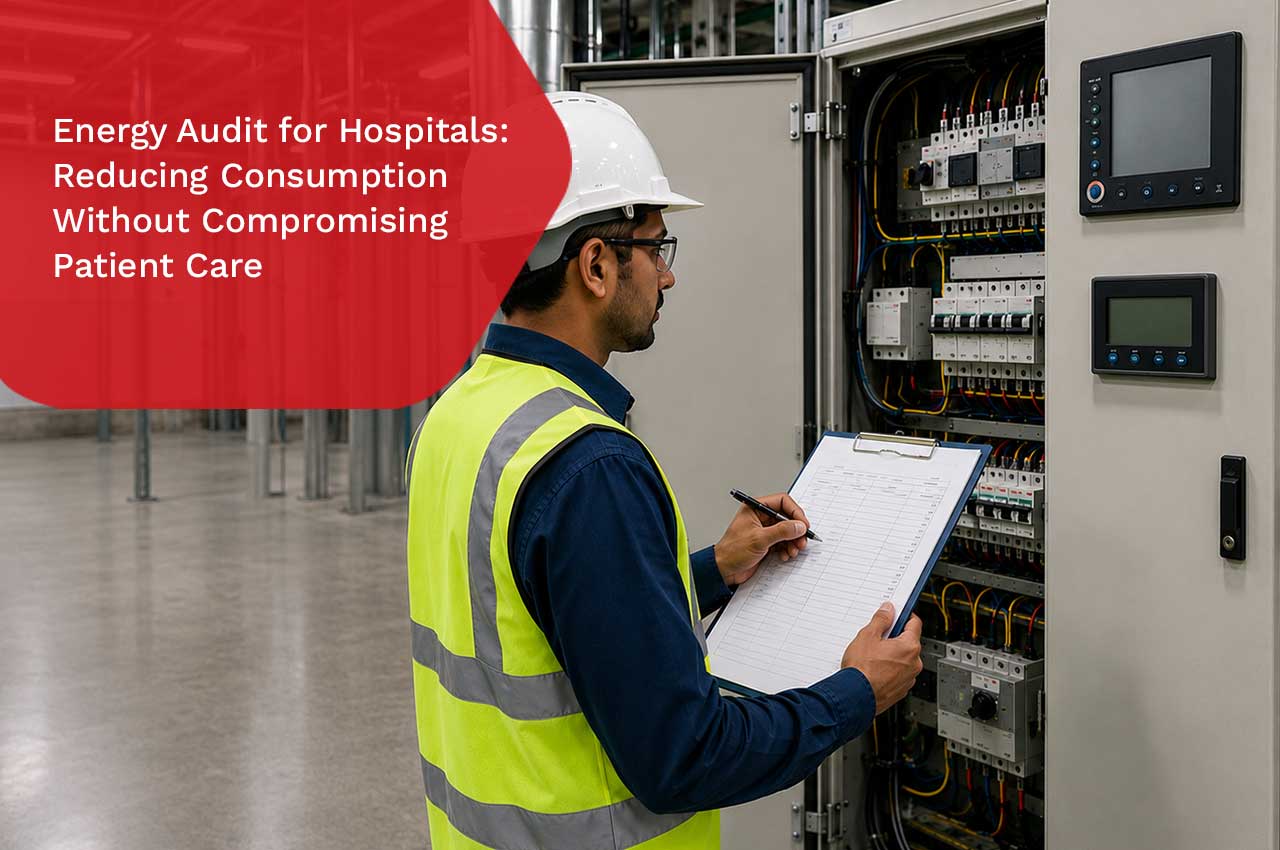
Energy Audit for Hospitals: Reducing Consumption Without Compromising Patient Care
Hospitals are among the highest energy-consuming facilities. Hospitals operate continuously and contain complex systems such as HVAC, medical equipment, and lighting. These are essential components of patient care that require continuous operation, making an energy audit for hospitals not only a cost-saving method but also an important part of strategic efforts to deliver sustainable healthcare services.
Today, with rising energy costs and increasing environmental concerns, energy efficiency has become a critical focus for healthcare administrators. Integrating health and energy efficiency in healthcare facilities ensures that hospitals are resilient, cost-effective, and environmentally responsible without compromising patient outcomes.
Understanding Energy Use in Hospitals
Hospitals are much larger consumers of energy than most commercial buildings. Reported energy consumption in hospitals is approximately 2.5–2.75 times greater per sq ft than that of a typical commercial building.
Despite occupying only about 4% of commercial floor space, healthcare facilities account for nearly 9% of total energy consumption.
The high energy consumption in these facilities is primarily due to:
- Continuous operations
- Indoor air quality and temperature control
- Energy consumption associated with medical devices like MRIs, CT scans, etc.
- Energy consumption associated with the sterilisation of tools, laboratories and laundry systems
In fact, hospitals over 200,000 sq ft consume, on average, more than 64% of all energy used in healthcare facilities.
It is important to conduct an energy audit in hospitals to help identify opportunities for improving efficiency and reducing costs.
What is an Energy Audit for Hospitals?
Hospitals conduct an energy audit to evaluate how much energy a healthcare facility uses. An energy audit helps hospital administrators identify:
- Areas of energy consumption
- Areas where energy is being wasted
- Areas where improvement is possible
Typically, energy audits evaluate:
- HVAC systems
- Lighting systems
- Electrical distribution
- Medical equipment
- Building envelope and insulation conditions
With the audit, hospitals can create specific strategies to reduce energy consumption while maintaining clinical performance.
Why is energy auditing important in hospitals?
In today’s healthcare system, energy auditing is essential. The reasons include:
1. Considerable Cost Reductions
With efficient systems and operational enhancements, hospitals may reduce energy consumption by up to 30% without compromising patient care. Even minor improvements can result in significant savings because hospitals spend billions on energy each year.
2. Enhanced Efficiency in Operations
Energy audits help identify inefficiencies such as:
- Overloaded HVAC systems
- Inefficient lighting
- Inadequate power distribution
Resolving these problems improves the overall reliability and performance of the facility.
3. Improved Patient Safety and Comfort
Contrary to popular belief, patient care is not compromised by energy efficiency. Rather, optimised systems:
- Maintain consistent indoor air quality
- Ensure proper temperature control
- Reduce equipment malfunctions
These measures directly support better patient outcomes.
4. Compliance and Sustainability
Healthcare institutions contribute significantly to carbon emissions. Energy audits help hospitals:
- Minimise environmental impact
- Achieve sustainability and regulatory goals
- Comply with international green healthcare initiatives
5. Making Decisions Based on Data
Modern audits use real-time monitoring to provide actionable insights. Hospitals can track:
- Department-specific energy consumption
- Peak demand patterns
- Equipment-level consumption
This makes it possible to make smarter investments in infrastructure improvements.
Key Areas Identified in Hospital Energy Audits
Hospitals can maximise the benefits of an efficient energy audit by focusing on the following areas.
HVAC Systems
HVAC systems account for a major share of hospital energy consumption. Improving airflow rates, optimising temperature setpoints, and implementing better maintenance schedules can increase energy efficiency.
Lighting
Lighting accounts for approximately 15–16% of total energy consumption in healthcare facilities. Replacing existing lighting with LED systems and smart lighting controls can significantly reduce energy consumption.
Medical Devices
MRI machines, ventilators and other diagnostic equipment represent a significant portion of hospital energy consumption. Proper scheduling and efficient device management can help reduce unnecessary energy use.
Power Distribution
Efficient power distribution systems are extremely important. Accurate energy measurement, professionally managed relays and efficient electrical infrastructure play a critical role. Expert service providers like LS Electricals provide valuable support to hospitals through effective energy monitoring and system optimisation.
Water Heating and Utilities
Water heating, sterilisation and kitchen operations represent a substantial portion of hospital energy use. High-efficiency boilers and heat recovery systems help reduce energy demand.
Integrating Health and Energy Efficiency in Healthcare Facilities
Healthcare providers must integrate energy efficiency into their everyday operations to ensure that the future of healthcare includes sustainability alongside quality patient care.
Smart Energy Management Systems
Digital monitoring solutions enable real-time tracking of electricity consumption. By using predictive maintenance and performance optimisation, healthcare providers can better understand and manage their energy usage.
Building Design in an Environmentally Friendly Manner
Modern hospitals are implementing:
- Energy-efficient HVAC systems
- Natural lighting and ventilation
- Green and sustainable building materials
- Integration of renewable energy resources
By using hybrid and solar energy systems, healthcare providers can reduce their dependence on traditional electricity sources.
Final Words
To sum up, technology is transforming how hospitals manage energy by providing automation, accuracy and real-time visibility into every unit of consumption. From IoT-enabled monitoring to AI-driven optimisation, these advancements are helping healthcare institutions improve energy efficiency without interfering with critical operations.
Hospitals should not treat energy audits as a one-time exercise. Basic audits should be conducted every 1–2 years, detailed audits every 3–5 years, along with continuous monitoring systems to ensure sustained performance and early detection of inefficiencies.
However, the real impact comes from integrating these technologies with precise testing frameworks and dependable electrical systems. Here, experienced partners like LS Electricals provide hospitals with reliable energy monitoring, relay testing, and system optimisation. By combining advanced technology with expert electrical infrastructure support, hospitals move closer to a future where patient care and operational efficiency coexist seamlessly.
FAQs
Q. What is an energy audit for hospitals?
Answer: An energy audit for hospitals evaluates energy usage across systems, identifies inefficiencies, and recommends improvements to enhance energy efficiency without affecting patient care or operations.
Q. Why is energy efficiency important in hospitals?
Answer: Energy efficiency helps hospitals reduce operational costs, improve system reliability, lower carbon emissions, and maintain optimal conditions for patient care and medical equipment performance.
Q. How often should hospitals conduct energy audits?
Answer: Hospitals should conduct basic energy audits every one to two years, detailed audits every three to five years, along with continuous monitoring for consistent performance.
Q. Which areas consume the most energy in hospitals?
Answer: Major energy consumption areas include HVAC systems, lighting, medical equipment like MRI and CT scans, and utilities such as sterilisation, laundry, and water heating systems.
Q. Can energy audits reduce hospital costs significantly?
Answer: Yes, energy audits can help hospitals reduce energy consumption by up to thirty percent through system optimisation, improved maintenance, and adoption of efficient technologies.
Q. How do service providers like LS Electricals support hospitals?
Answer: Providers like LS Electricals support hospitals through accurate energy monitoring, relay testing, and electrical system optimisation, ensuring reliable operations and improved energy efficiency across facilities.


 Brands


 Applications



 Recent Posts