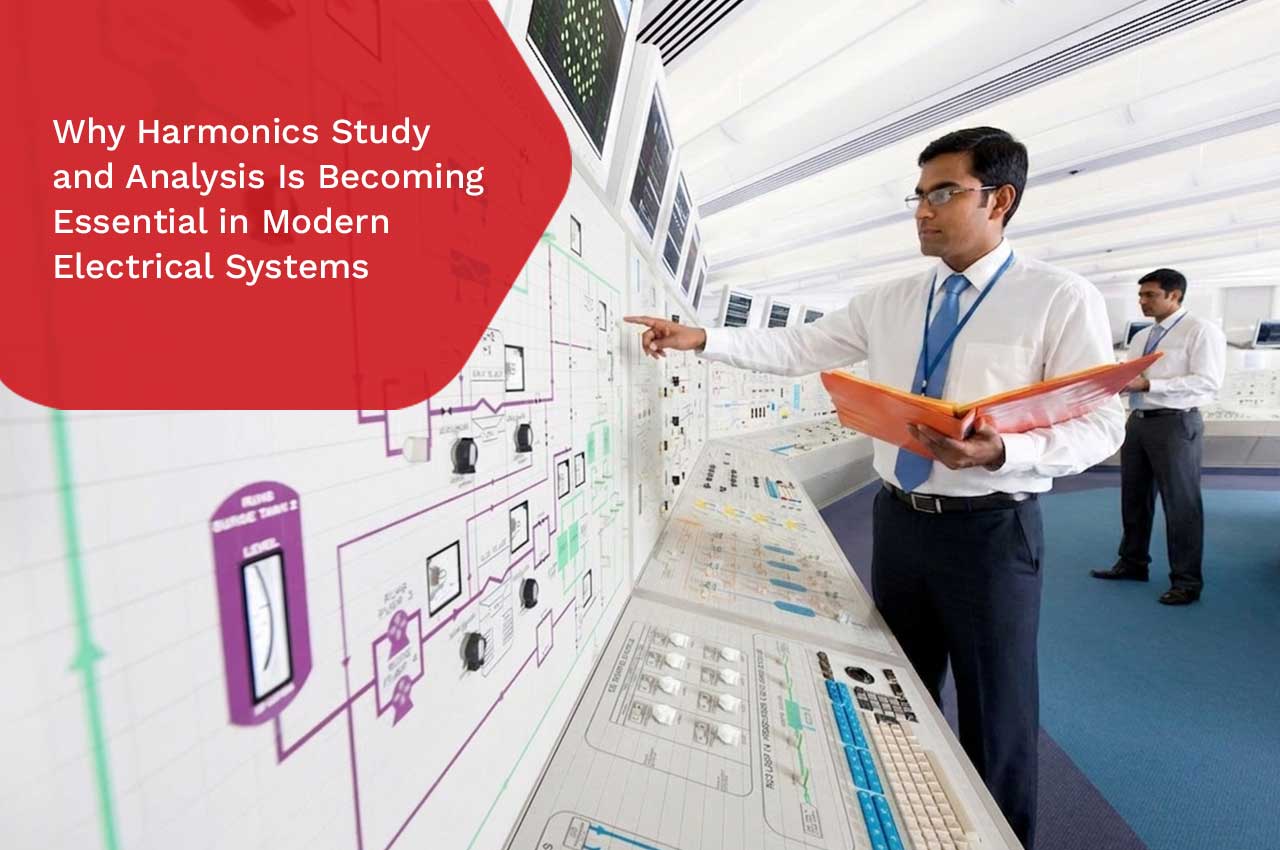
Why Harmonics Study and Analysis Is Becoming Essential in Modern Electrical Systems
Power networks have become complex systems composed of many electronic devices and power-electronic driven loads. Modern electrical systems are now made up of advanced electronics, automation technologies, renewable integrations and power-electronic driven loads. From commercial buildings to smart factories, modern electrical installations rely heavily on equipment that improves efficiency and control. As the use of nonlinear loads increases, the demand for harmonic study and analysis has grown significantly. If not properly addressed, harmonics can severely impact power quality, reduce equipment life and create serious safety hazards.
What are Harmonics?
Electrical systems that use an AC power source may contain harmonics, which refer to current and voltage components that operate at an integer number of times the fundamental frequency of the system (60Hz for USA/Canada systems, 50Hz for European Union systems), and which cause distortion of the basic sine wave in modern electrical installations. They are primarily caused by nonlinear loads, which draw current from the power system in a nonlinear way. Examples include variable frequency drives, LED Lighting, Switched Mode Power Supplies (SMPS), and Uninterruptible Power Supplies (UPS), among others, used widely in modern electrical installations, increasing the need for Harmonic study and analysis.
How Do Harmonics Affect Power Quality in Modern Installations?
- Increased heat and losses
The harmonic currents cause an increase in the root mean square (RMS) current. This increase in current will normally be counted as additional heating within conductors, transformers, motors and various other types of equipment. The additional heat will increase equipment stress from the additional temperature. The dielectric will deteriorate faster due to the increased temperature stress applied to it. Equipment can also be placed under stress even if the loading on the equipment is at a reasonable level.
- Reduced system reliability
Many modern consumer electronic devices require clean, sinusoidal voltages to operate properly. Harmonic distortion may be a cause of malfunction, unanticipated reset, incorrect communication and premature failure for sensitive electronic equipment in modern electrical installations. This makes Harmonic study and analysis essential to maintain reliability.
- Overloading of System Components
Although harmonics do not add useful energy to the network, they do add to the amount of total value of current flowing through the conductors and transformers. This increase in total current flows through the wires and transformers causes an apparent overload to occur. Therefore, the circuit breakers that are sensitive to overloads can trip without the actual electronic overload present.
- Interference with Communication Systems and Control Circuits
Harmonics can be very damaging to signalling and data cables due to the induction of Electromagnetic Interference in the vicinity of the cable, which can result in communication drop-outs or data errors, as well as malfunctions in the circuitry of the devices controlled by the cable. The reliability of communication between devices in ‘smart factories’ and automation facilities will be of utmost importance.
When Should a Harmonic Study Be Performed?
Conducting a harmonic study and analysis at the right time is vital to maintain healthy electrical systems. Here are key instances when such a study should be performed:
- During New Construction or Major Renovations
Prior to commencing construction or renovations to a new site, it is essential to assess the harmonic characteristics of the system. By identifying harmonic potential early, modern electrical design can minimise the heavy financial burden resulting from retrofitting later on. An accurate assessment will also provide guidance for the selection of appropriate equipment and their layout.
- Before Installing Sensitive or Harmonic-Generating Equipment
When adding additional load devices such as data centers, VFD-driven motors or large UPS systems into electrical systems, it is necessary to perform a harmonic study and analysis prior to installation. This evaluation can help you understand how these new loads will affect the overall power quality and compatibility with the existing modern electrical installations.
- After Recurring Equipment Failures
Harmonics can sometimes be a root cause for equipment that repeatedly malfunctions, overheats, or has unexpected failures. By conducting a harmonic study, any distorted waveforms that are affecting the reliability of the equipment can be identified, and this can lead to a reduction in future failures and an increase in system uptime.
- During System Expansion or Load Changes
System expansion or load restructuring in electrical systems can result in changes in the harmonic behaviour of an electrical installation. Even a very small alteration, such as the addition of another nonlinear load in modern electrical installations, could result in an increase in harmonic distortion levels.
A Harmonic study and analysis will provide information to ensure that system changes won’t cause the system to operate outside of acceptable levels in electrical systems.
Final Thoughts
Harmonic study and analysis has become essential in modern electrical installations. As nonlinear loads grow in number and complexity, so does the risk of power quality issues. Harmonics can damage equipment, reduce efficiency, increase costs and compromise reliability. A well-timed harmonic study helps identify these problems and guide mitigation efforts. In doing so, it protects infrastructure, improves system performance and supports regulatory compliance.
FAQs
Q. Why are harmonics common in modern electrical installations?
A. Modern electrical installations use devices like VFDs, UPS systems, LED lighting, and computers. These nonlinear loads distort waveforms and generate harmonics in the power system.
Q. How do harmonics affect power quality?
A. Harmonics distort voltage and current waveforms. This reduces power quality, increases losses, overheats equipment, and leads to malfunction or premature failure of sensitive devices.
Q. What are the signs of harmonic problems in electrical systems?
A. Common signs include overheating transformers, nuisance tripping of breakers, capacitor failures, poor power factor, unexpected equipment shutdowns, and abnormal noise in motors.
Q. When should a harmonic study be conducted?
A. A harmonic study should be performed during new installations, system expansions, the addition of nonlinear loads, recurring equipment failures, or when ensuring compliance with harmonic standards.
Q. Can harmonics damage transformers and motors?
A. Yes. Harmonic currents increase heating and core losses in transformers and motors. This reduces efficiency, shortens lifespan, and may cause insulation breakdown over time.
Q. How do harmonics increase operational costs?
A. Harmonics raise energy losses, reduce efficiency, increase maintenance needs, and shorten equipment life. This leads to higher electricity bills and unexpected replacement expenses.


 Brands


 Applications



 Recent Posts